4/22/2025:

Tuesday Mortgage Memo: Your Weekly Market Highlights

5 KEY HIGHLIGHTS BROKERS NEED TO KNOW


With central banks pausing, bond markets swinging, and U.S. political theatrics fuelling global volatility, brokers face both risk and reward. Here's what you need to know this week to guide clients and grow your business:


1️⃣ BoC Holds—But the Cut Clock Is Still Ticking

The Bank of Canada (BoC) paused its policy rate at 2.75%, ending a 225-bps cutting streak. But this is likely just an intermission. Two divergent BoC scenarios predict either renewed easing if tariffs cool, or stagflation if a full-blown trade war erupts​​.

🔑 Broker Strategy: Message clients on variable rates—they may see further savings if easing resumes. Position this pause as a prep window for refinancing ahead of anticipated cuts, especially for clients concerned about economic uncertainty.


2️⃣ U.S. Chaos = Gold Rush & Bond Swings

Trump’s attacks on Fed Chair Powell and persistent trade threats have sent U.S. bond yields wobbling, the dollar sliding, and gold surging to $3,500—up 33% YTD​​. This "flight from safety" is disrupting market expectations globally.

🔑 Broker Strategy: Reassure clients spooked by the headlines. Pitch fixed-rate mortgages to those seeking stability amid volatility, and highlight that these global shocks may push Canadian yields lower again.


3️⃣ Inflation Outlook: Down But Not Out

Oil prices are down, the carbon tax has been scrapped, and tariff reprieves are in play. All this points to tamer inflation short-term. But risks of a rebound remain if trade tensions flare or deficits deepen​​.

🔑 Broker Strategy: Promote sub-4% fixed rates as a hedge against future inflation. For borrowers worried about long-term rates, suggest locking now with flexible mid-term products (e.g., 4-year fixed) to benefit from today’s lower pricing without long-term handcuffs.


4️⃣ Housing Inventory Climbs—So Do Discount Opportunities

The housing market is shifting: GTA prices rose 2.6% in early April, but sales dropped 40% YoY. Condo inventories in Vancouver are set to jump 60% this year​​. Meanwhile, some sellers are taking losses on 2022 purchases​.

🔑 Broker Strategy: Target move-up buyers and investors. With softening prices and growing listings, savvy clients can negotiate deals—especially with builder incentives.


5️⃣ Fixed vs Variable: The Trade-War Tug-of-War

Variable mortgages may still be the cheaper path over the full term, but only for borrowers with risk tolerance and financial buffer. For others, 4-year terms may offer strategic timing—maturing just after the next U.S. election​​.

🔑 Broker Strategy: Offer side-by-side comparisons of 4-year vs 5-year options. For politically cautious clients, frame 4-year terms as a "Trump hedge" that provides early exit flexibility and aligns with average mortgage break timelines.


📢 Final Thought:

The tariff rollercoaster, Powell vs. Trump drama, and BoC caution all underscore one thing: uncertainty is the new normal. Brokers who can cut through the noise, educate clients with clarity, and position the right product at the right time will win this season.


Stay proactive. Stay informed. Stay indispensable.
Let’s make it a strong week ahead!


EPISODE 38: BE THE BETTER BROKER with Dustan Woodhouse

Guest: Dustan Woodhouse


Hosts Dean Lawton and Jason Marshall unpack game-changing insights from the Be The Better Broker conference in Whistler with Dustan Woodhouse, covering everything from emotional intelligence and tech integration to ethical sales strategies and the future of broker education. A must-listen for brokers ready to grow, lead, and thrive in today’s shifting market.


WATCH OR LISTEN HERE


Choose to Receive the ABW Memo

This is a choice-based resource. If you'd like to continue receiving these updates weekly, please register here:
Click here to subscribe to the ABW Tuesday Mortgage Memo


We look forward to helping you stay ahead of the market in 2025.


By Dean Lawton December 16, 2025
12/16/2025 Tuesday Mortgage Memo: Your Weekly Market Highlights
By Dean Lawton December 11, 2025
EPISODE 56: Behind the Lender with Alex Dey, ScotiabanK Guest: Alex Dey, VP Portfolio Optimization, Scotiabank Hosts: Dean Lawton & Jason Marshall In this Behind the Lender episode, Alex Dey pulls back the curtain on how Scotiabank thinks about mortgages, capital, and the broker channel. With 22 years at the bank and more than a decade focused on mortgages, Alex oversees portfolio optimization, which means keeping the mortgage book growing, profitable, within risk appetite, and capital efficient. He explains why mortgages are considered an “anchor product” for the bank and why brokers are so central to that strategy. With roughly half of Canadians now choosing brokers, Scotiabank is committed to being present in every channel clients want to use, including branch, mobile specialists, digital, and the broker channel through the SMA model. Pricing, Liquidity Premiums, and a Wild Year for Rates One of the most educational parts of the episode is Alex’s breakdown of how a big bank actually prices mortgages. He explains that Scotiabank’s cost of funds has two main components: A base rate that tracks the bond market and can be hedged. A liquidity premium that reflects the extra risk the market assigns to bank funding and cannot be hedged. In the past year, total cost of funds moved roughly ten times more than the Bank of Canada’s overnight rate changes, with sharp spikes driven by politics, trade headlines, and market sentiment. Sometimes the bond component moved while liquidity premiums stayed flat, and sometimes it was the opposite. For brokers who only watch the bond yield and expect rates to react one to one, this is a powerful reminder that pricing is built on more than a single line on a chart, and that non hedgeable liquidity premiums can squeeze margins even when bonds look friendly. Renewal, Retention, and the Broker Concierge With a massive maturity wave in motion, Scotia has doubled down on renewal and retention. Alex outlines three key pillars: A dedicated team of mortgage renewal specialists focused solely on upcoming maturities. A digital renewal path for clients who are comfortable self serving. A dedicated broker concierge process for Scotiabank renewals where staying put is the right move. Through the concierge, brokers can refer clients directly into Scotia’s renewal team, get updates on progress, and know their clients are being looked after without needing to re underwrite an entire deal. It protects the client experience, preserves the relationship, and respects the broker’s reputation at the same time. Alex also touches on blend and extend strategies and how they are increasingly attractive for clients who locked in at peak rates and now want payment relief without a full refinance. Deepening Relationships Through Mortgage Plus One theme that runs through the conversation is just how intentional Scotia has been about using Mortgage Plus to deepen relationships—not just with clients, but with brokers as well. By tying the mortgage to day to day banking and an additional product, Scotia isn’t just protecting capital efficiency; they’re building a stickier, more holistic relationship that’s better for long term advice. For brokers, that means the clients they place with Scotia are more likely to truly “bank” there, not just park a mortgage for five years. Alex and the hosts talk about how that shows up in real life: better service, more tailored solutions over time, and a tighter alignment between broker recommendations and bank execution Broker–Bank Alignment and the SMA Model Alex also highlights how the SMA model creates alignment that’s hard to replicate. Because the structure is relationship based rather than purely transactional, Scotia can openly share challenges (like capital constraints) and co design solutions with its top broker partners—as they did with Mortgage Plus. That level of transparency created genuine buy in on the broker side. Brokers felt like they were part of the solution, not just being handed a new requirement. Over time, that’s led to stronger loyalty, higher quality submissions, and a shared focus on doing what’s best for the client while still respecting the bank’s economic realities. What Brokers Can Take Back to Their Business There are a few clear takeaways brokers can apply immediately in their own practice. First, understand your lender’s world: pricing isn’t just “bonds up, rates up.” Liquidity premiums, hedging costs, and capital rules all matter—and clients appreciate when you can explain that clearly. Second, live the products you recommend. Dean shares that moving his own mortgage and banking to Scotia changed the way he talks about the client experience, because he’s actually lived it. Finally, don’t sleep on renewals and retention. With waves of maturities coming, brokers who understand lender programs like Scotia’s concierge and renewal specialist model will be far better positioned to guide clients through the next few years. Outlook for Rates and the Mortgage Market Looking ahead, Alex leans on Scotiabank Economics: The overnight rate is expected to sit at the bottom end of the “neutral” range, with no further cuts anticipated. Modest hikes are expected later in 2026 as inflation, growth, and unemployment rebalance. He highlights that ultra low rates are usually a sign of economic stress, not something to root for, and encourages brokers to think beyond only purchase business. With huge renewal cohorts, refinance opportunities, switches, and blend and extend options, the mortgage market itself remains very active even if resale volumes soften in some regions. For brokers, the message is clear: understand how pricing really works, lean into education, and leverage strong bank partnerships like Scotia’s SMA model to deliver better advice and smoother client experiences through the next phase of the cycle. Why You Should Listen This episode is a masterclass in understanding how big-bank pricing, capital strategy, and broker partnerships actually work behind the scenes. If you’re a broker who wants to give more sophisticated advice, look beyond headline bond yields, and truly understand the forces shaping rate sheets, this conversation is essential. For weekly market updates, sign up for the ABW Tuesday Mortgage Memo . If you’re a broker considering a network change or looking to grow, reach out to us to explore how we can support your success.

By Dean Lawton December 10, 2025
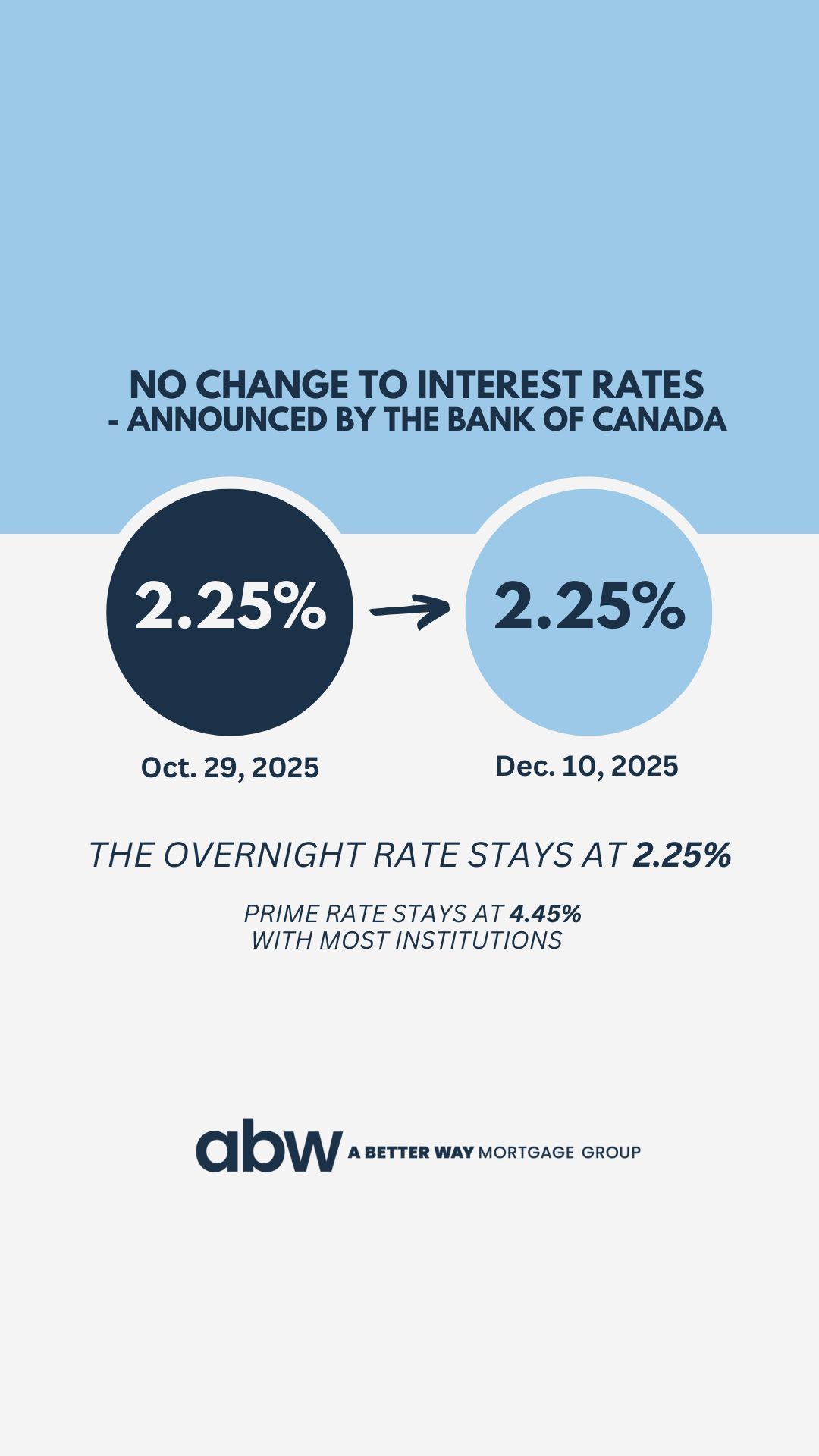
12/10/2025: BoC Holds at 2.25%: Stability Takes Centre Stage as Canada Enters 2026
By Dean Lawton December 9, 2025
12/09/2025 Tuesday Mortgage Memo: Your Weekly Market Highlights
By Dean Lawton December 3, 2025
12/02/2025 Tuesday Mortgage Memo: Your Weekly Market Highlights
By Dean Lawton November 27, 2025
BEHIND THE NETWORK – Ep. 55 with Chad Gregory, Dominion Lending Centres Hosts: Dean Lawton & Jason Marshall Behind the Network returns with an inside look at Dominion Lending Centres, one of Canada’s most influential mortgage brands. Chad Gregory, Vice President of National Sales, joins Dean and Jason to trace DLC’s journey from its Ontario startup roots to an industry-defining network built on brand, belief, and relentless innovation. Chad shares stories from the early days — long drives, cold calls, and the hustle that helped turn a new logo into a national force — and explains how consistency, client care, and technology continue to shape success for brokers across the country. From Door Knocks to National Impact When Chad joined DLC, the company had a small Western presence and a big vision. Tasked with launching Ontario operations, he and a small team hit the ground running — calling, driving, and visiting every brokerage that would listen. “It was a grind,” Chad says. “But we believed in what we were building.” That belief started with a simple conviction: the industry needed a brand. At a time when brokerages operated as small, disconnected shops, DLC invested in national marketing, consistency, and recognizable credibility. “It was about building trust,” Chad explains. “The same way Canadians trust their banks, we wanted them to trust mortgage brokers — and a strong brand makes that possible.” Within a few years, DLC’s footprint had exploded. The combination of professional branding, smart recruiting, and community-building created a ripple effect that would reshape the broker channel entirely. The Power of Process Before joining DLC, Chad learned sales the hard way — knocking on doors. “The first door I ever knocked on, I froze,” he laughs. “But every one after that got easier.” That experience became the foundation of his leadership style. Today, he teaches brokers the same principles that helped him build the network: use proven scripts, role-play daily, and follow a rhythm. “It’s not about reading from a script,” he says. “It’s about understanding what works, internalizing it, and making it sound like you.” Chad also emphasizes what happens after the deal closes. A small gesture or follow-up can create lifelong clients. “The bar for post-funding care is low,” he says. “When you show up after closing, you stand out — and that’s where loyalty starts.” Tools That Redefine Efficiency DLC’s growth hasn’t just been about people — it’s been about technology. Chad points to My Mortgage Toolbox, Velocity, and Gold Rush as key innovations driving broker success today. My Mortgage Toolbox, DLC’s mobile app, has become a staple for brokers and clients alike. “The most Googled term in our space isn’t ‘mortgage rates,’ it’s ‘mortgage calculator,’” Chad notes. “If your clients don’t have your calculator, they’re using someone else’s — and that means they’re in a competitor’s funnel.” The app’s refinance analyzer tool has helped brokers close millions in additional business, giving clients personalized savings reports within minutes. Then there’s Velocity — DLC’s all-in-one broker platform. Developed as a secure, efficient alternative to legacy systems, Velocity integrates applications, documentation, compliance, and lender submissions in one place. “We built our own highway,” Chad says. “When the rest of the industry was stuck in traffic, we kept moving.” And with Gold Rush, brokers can finally automate what they used to neglect: consistent, meaningful communication. The built-in CRM drives renewals, birthdays, and milestone campaigns that keep brokers in front of their clients — all refreshed annually to stay relevant. “You just have to turn it on,” Chad says. “It does the heavy lifting.” AI and the Future of Brokering Chad believes the next competitive edge lies in AI adoption — and DLC is already ahead. Velocity now integrates GPT and Gemini to improve lender notes, polish client emails, and assist with document verification. “AI isn’t replacing brokers,” Chad says. “But brokers who use AI will replace those who don’t.” Through its AI Essentials training, DLC is helping brokers adopt technology responsibly — blending automation with human expertise to save time, reduce errors, and elevate client service. Broker Development & Culture At the heart of DLC’s success is a commitment to its people. Chad attributes much of the company’s staying power to culture — the way it celebrates broker achievements, invests in training, and cultivates a shared purpose. “It’s always been about partnership,” he explains. “Gary and the leadership team have built a culture that puts brokers first. When people feel supported, they stay, they grow, and they build something bigger than themselves.” For ABW, that philosophy mirrors its own approach — bringing brokers together under a collaborative, education-first environment. “It’s not just about recruiting,” Dean adds. “It’s about helping every agent become the best version of themselves within the network.” Training That Drives Growth One of the most compelling takeaways from the conversation is DLC’s approach to training and continuous improvement. From foundational sales scripts to advanced AI modules, the company provides an infrastructure designed to help brokers grow by design, not by chance. “Our training library is deep,” Chad says. “From mindset and marketing to lender relations and client conversion — we’ve built a curriculum that supports a 15–20% year-over-year business increase when followed consistently.” Dean and Jason plan to bring that framework directly to the ABW network through new DLC-led training sessions in 2025, ensuring ABW brokers get hands-on exposure to the same proven systems that drive national growth. A Network That Listens In a fast-changing market, innovation only matters if it’s shaped by the people using it. That’s why DLC’s leadership has made listening part of its operating model. “Our agents tell us what’s working and what’s not,” Chad says. “Velocity updates, CRM tweaks, new features — they all start with broker feedback.” Through advisory groups and one-on-one collaboration, brokers’ ideas directly influence platform updates, campaign design, and training initiatives. “It’s not top-down leadership,” Chad emphasizes. “It’s partnership — and that’s why we keep getting better.” For ABW, that principle resonates deeply. “Being heard matters,” Dean says. “We’re building a community that doesn’t just use the tools — we help shape them.” Culture, Leadership, and What’s Next At its core, DLC’s growth has always been driven by people. “Our job is to make brokers’ jobs easier,” Chad says. “That’s been Gary’s message since day one — deliver value, innovate, and never stop improving.” Dean and Jason echo that mindset within the A Better Way network. “It’s the same culture we’ve built,” Dean says. “Show up, invest in your people, and always think about how to make their work better.” Looking ahead, both DLC and ABW are setting ambitious goals. With DLC targeting $100 billion in funded volume, ABW’s aim is to represent 10% of that. Chad calls it realistic — and motivating. “The best is yet to come,” he says. “2026 will be our biggest year yet.” Why You Should Listen This episode is a masterclass in growth — how belief becomes momentum, how systems drive performance, and how technology amplifies human relationships. Chad’s story is proof that even in a digital age, the fundamentals still matter: connect, communicate, and care.. For weekly market updates, sign up for the ABW Tuesday Mortgage Memo . If you’re a broker considering a network change or looking to grow, reach out to us to explore how we can support your success.

By Dean Lawton November 25, 2025
11/25/2025 Tuesday Mortgage Memo: Your Weekly Market Highlights
By Dean Lawton November 19, 2025
11/18/2025 Tuesday Mortgage Memo: Your Weekly Market Highlights
By Dean Lawton November 13, 2025
BEHIND THE LENDER – Ep. 54 with Steven Lang, VWR Capital Hosts: Dean Lawton & Deryk Williamson Behind the Lender returns with a deep dive into VWR Capital, a long-standing Canadian MIC known for consistency, clarity, and client-first execution. Steven Lang joins Dean and Deryk to unpack how VWR scales responsibly, makes quick and fair decisions, and supports brokers with a simple product set that performs in good markets and tough ones alike. Steven’s Path: From Credit Union Leadership to MIC Growth VWR’s differentiation starts with restraint. The lender sticks to a straightforward, one-year product, clear loan-to-value limits, and conservative risk standards. The watchwords are consistency and policy discipline. If a property has issues or a profile is outside the box, VWR is comfortable saying no quickly and steering the broker toward a better fit. Fee Philosophy VWR is known in many markets for low fees. That matters, especially for clients newer to private lending. Fees are stable at renewal, and there is no appetite for surprise costs. The approach is simple: fair APR, low friction, and no gouging. While cost sensitivity varies by province, VWR keeps the structure steady to protect clients and reputation. Speed, But Not at Any Cost Speed wins deals, but it cannot replace underwriting. VWR guarantees a commitment within 24 business hours once it has the information it needs, and the team is investing in technology to accelerate condition review next. When speed requires tradeoffs, VWR stays aligned with compliance and fraud controls. Quick is good. Reckless is not. A practical tip from Steven: start with your BDM. An email with only the property address in the subject line is enough to confirm if the location fits and what max LTV might look like. That quick pre-flight check saves hours for everyone. The Relationship Lens: How VWR Works with Brokers VWR is intentional about partnerships. The team prioritizes responsiveness and candid guidance, even if that means recommending another lender. That trusted path-to-no builds long-term loyalty and keeps VWR at the top of a broker’s call list when the next file appears. Communication standards are clear: answer fast, escalate early, and keep the broker in the loop. On rush files, relationships matter. Partners who submit complete, transparent packages get faster solutions, fewer red flags at legals, and smoother client experiences. Inside the Credit Desk: Workflow and Escalation Files route from BDM to underwriting, with assignment based on licensing where needed. The BDM stays active throughout, not as a pass-through but as an accountable partner. If a decline is likely, the BDM is pulled in early to explore alternatives. Escalations can move to the underwriting manager and Steven’s team with a focus on structure, data, and a make-sense approach. The most common friction point is undisclosed information that surfaces midstream. VWR’s stance is simple: disclose early, fix problems together, and keep investors protected. Market Signals: Where the Demand Is Shifting The core private profile still shows up: self-employed clients, credit challenges, and borrowers navigating income normalization. Two trends are rising: Developers holding finished inventory. Cash flow is tight for some builders with a few unsold homes. Bridge support to a sale is increasingly common. Condos and presales pressure. In some markets, values are not matching purchase price on completion. VWR will look at these, often at lower LTVs, and with eyes open on time-to-sell and carrying costs. When risk rises in a segment or region, VWR tightens LTV and focuses on marketability. When data improves, the team expands carefully rather than trying to time the exact turn. Exit Strategy and the Ability to Pay VWR does not calculate traditional debt servicing, but the story must make sense. How will the client make payments in the short term, and what is the credible exit? The target is not a one-year deferral of a problem. It is a bridge to an outcome: sale, refinance to B or A, or a repair and stabilize plan that is realistic in the current market. Compliance and FinTrack: Ahead of the Curve VWR’s processes have evolved with AML and FinTrack expectations, including post-funding monitoring where warranted. Regular audits, licensing, and training keep the team aligned with the rules while preserving an efficient borrower experience. Investors expect that rigor. Borrowers benefit from it when expectations are set clearly up front. Technology and Data: Practical First, Powerful Next VWR is layering in integrated systems that centralize data across sales, marketing, underwriting, and accounting. The goal is simple: cleaner data, faster insights, better decisions. A near-term example is an interactive lending map that displays cities, max LTVs, appraisers, and the right BDM contact at a click. Next up is boundary logic and postal code precision. AI is already in daily staff workflows for drafting, analysis, and ideation. On the credit side, low-LTV, well-defined segments may be candidates for higher automation over time, with human checks preserved for investor comfort and edge cases. Borrower Experience and Post-Funding Care VWR’s largest team is administration: renewals, payouts, recoveries, and collections. Response times are measured in hours, not days. Clients get structured touchpoints before renewals and clear guidance on what to do next. The standing request from VWR to brokers is simple: stay engaged after funding. When brokers remain the client’s primary advisor, outcomes improve and future refinances stay in the relationship. To help brokers, VWR provides a simple post-funding contact sheet with the right numbers for payments, renewals, and statements. Adding that to your client handoff reduces confusion and inbound noise, and raises client satisfaction. Broker Playbook: How to Win with VWR Start with the address. Confirm lendable area and ballpark LTV before you build the full package. Tell the whole story. Disclose all material items up front. Surprises slow everything down. Show a credible exit. Outline the refinance path or sale timeline, and how payments will be made in the interim. Build the relationship before the rush. Meet the BDM now so your first live file is not your first introduction. Use VWR’s resources. Newsletter, tools, and quick BDM consults will reduce back-and-forth and help position files the right way. The Road Ahead As rates evolve and spreads compress, VWR will protect margins, watch product mix, and continue investing in data and tech. Growth is the plan, but not at the expense of culture. The company intends to remain a relationship-led lender that brokers can reach, understand, and rely on for the product it does best. Why You Should Listen Catch the full conversation with Steven Lang to hear the nuance behind the policies, the real-world examples, and how VWR thinks about risk, speed, and service in today’s market. If you found value in this episode, subscribe on Spotify, Apple Podcasts, or YouTube, and share your feedback. And if you want weekly market context, sign up for the ABW Tuesday Mortgage Memo for concise updates brokers can use with clients. For weekly market updates, sign up for the ABW Tuesday Mortgage Memo . If you’re a broker considering a network change or looking to grow, reach out to us to explore how we can support your success.

By Dean Lawton November 12, 2025
11/12/2025 Tuesday Mortgage Memo: Your Weekly Market Highlights